
📋
Complete Guide to 2026 American Fashion Trends
01
The Psychology of the Shift
02
Soft Tailoring 2.0 Deep Dive
03
Cognitive Knitwear Revolution
04
The Cocooning Aesthetic
05
Supporting Ecosystem
06
Your Action Plan
The Psychology Behind the 2026 Fashion Revolution
To understand why 2026 trends are dominated by “comfort meets personality,” we must examine the cultural, technological, and psychological forces converging in post-pandemic American society. This isn’t a fleeting trend cycle—it’s a permanent recalibration of our relationship with clothing.
🎯 Core Drivers of Change:
- The “Work-Life-You” Blur: With hybrid work becoming permanent, clothing must transition seamlessly between professional video calls, school runs, and personal time.
- Wellness as Status: Displaying physical and mental wellbeing through one’s appearance has replaced overt displays of wealth as a status symbol.
- Digital-First Selfhood: Our identities are increasingly formed and expressed online, requiring clothing that photographs well, tells a story, and translates across platforms.
- Climate Anxiety: Extreme weather events and climate consciousness demand adaptable, layered, and breathable clothing systems.
- Generational Values Shift: Gen Z and Millennials prioritize authenticity, sustainability, and experiences over material accumulation.
📊 The Numbers That Prove the Shift
Projected value of the U.S. “comfort-first apparel” market by end of 2026, up from $29B in 2023.
of American office workers report their company has permanently relaxed dress codes post-2023, focusing on “appropriate presentation” over traditional suits.
growth in searches for “emotional dressing,” “mood-based outfits,” and “clothing as self-care” since 2022.
Cognitive Knitwear: Where Technology Weaves Your Story
If Soft Tailoring 2.0 reimagines our external presentation, Cognitive Knitwear revolutionizes our intimate relationship with clothing. This trend represents the pinnacle of personalization, merging biometric data, emotional inputs, and advanced manufacturing to create garments that are not just worn, but experienced as extensions of self.
🧠 The Cognitive Knitwear Creation Pipeline
Data Input
User provides photos, mood selections, health data (opt-in), or voice notes about a memory.
AI Interpretation
Algorithms translate data into design elements: color gradients, stitch patterns, texture maps.
Co-Creation Interface
User adjusts the design in a real-time 3D simulator, changing proportions, details, and fit.
Knit-to-Order
Automated digital knitting machines create the garment on-demand, minimizing waste to under 5%.
📈 Market Applications & Leading Brands
Application Type |
How It Works |
Price Point |
Pioneering Brand |
|---|---|---|---|
Biometric Wellness Sweaters |
Knit pattern changes density based on body temperature zones from health app data. |
$$$ ($280-450) |
Symbio (San Francisco) |
Narrative Memory Knits |
Creates a unique pattern from a significant date’s weather data or photo color palette. |
$$ ($180-300) |
ChronoThread (Brooklyn) |
Modular Knit Systems |
Purchase a “core” sweater and add snap-on collars, zip sleeves, or attachable pockets. |
$$$ ($75 core + $40-90 per module) |
Assemblage (Portland) |
❤️
The Psychological Power of Cognitive Knitwear
Beyond the technological marvel, this trend addresses deep psychological needs. In an increasingly digital and often impersonal world, wearing a garment that is literally coded with personal meaning provides:
Physical objects that ground our sense of self amidst digital noise.
Wearing your story invites meaningful connection and authentic interaction.
The weight and texture of a meaningful knit can provide anxiety-reducing deep pressure.
The Cocooning Aesthetic: Fashion as a Portable Sanctuary
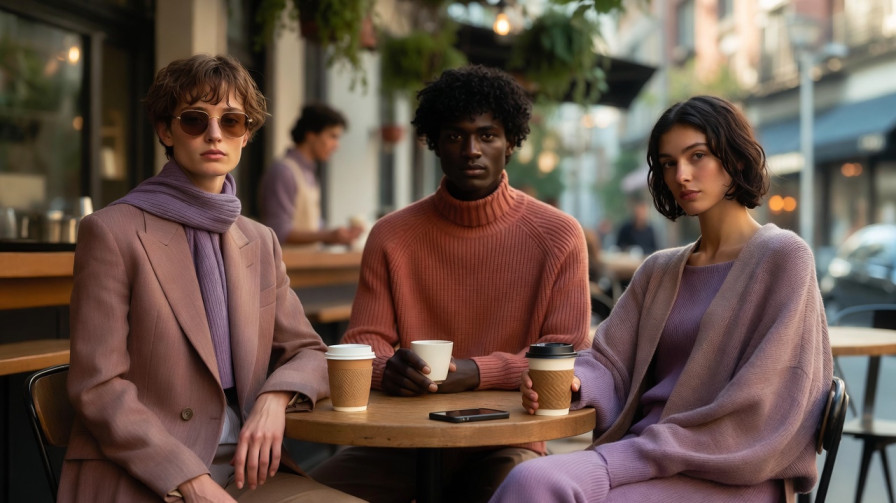
In direct response to global uncertainty and constant digital stimulation, the Cocooning Aesthetic has emerged as a dominant 2026 trend. This is clothing designed to create a psychological and physical buffer between the wearer and the world. It’s about volume with intention, protection with expression, and creating a sense of safety through enveloping forms and comforting textures.
🛡️ The Protective Principle
Cocooning garments create literal and figurative space:
- Far-From-the-Body Silhouettes: Design that avoids clinging, creating air pockets between fabric and skin.
- High Necklines & Deep Pockets: Elements that allow for physical retreat and hand-concealment.
- Weighted Elements: Strategically placed heavier fabrics or subtle weights that provide grounding sensory input.
- Hooded Everything: Beyond practicality, hoods create a customizable sense of privacy in public spaces.
🎨 The Expressive Paradox
Cocooning avoids shapelessness through bold choices:
- Unexpected Color in Volume: A massive puffer coat in “digital lavender” or “solar orange.”
- Textural Contrast: Combining matte quilted sections with shiny nylon or fuzzy shearling trim.
- Architectural Details: Seaming, quilting patterns, and draping that create visual interest on large canvases.
- Strategic Sheerness: Layering opaque cocooning pieces over sheer fabrics to maintain depth.
🛒 The 2026 Cocooning Essentials Checklist
The Architectural Puffer
Not just warm, but sculptural. Look for curved seams, asymmetric zippers, and insulation that creates interesting volume rather than bulk.
The Slouch System Dress
A dress so easy it feels like getting dressed in a single motion. Key features: dropped shoulders, kangaroo pocket, and a fabric with beautiful drape.
The Wide-Leg Anchor Pant
The foundation of the cocooning silhouette. Ultra-high waist, leg that widens from hip to floor, in a substantial fabric like wool crepe or heavy canvas.
⚠️ The “Sack vs. Sanctuary” Trap
The most common mistake in cocooning is confusing enveloping volume with a complete lack of shape. The difference lies in intentional design.
- AVOID: All-over stretchy fabric with no seaming or structure.
- CHOOSE: Garments with clear shoulder lines, waist definition (even if dropped), and considered proportions.
- RULE: If you feel hidden rather than held, the garment isn’t serving the cocooning ideal.
🎓 Cocooning Masterclass: The 1+1 Rule
To perfectly execute this trend, apply this simple formula to every outfit:
Examples: Cocooning coat + sleek leather leggings. Slouch dress + structured belt bag. Wide-leg pants + fitted turtleneck.
The Supporting Ecosystem: Accessories, Tech & Sustainability
The core trends of 2026 don’t exist in a vacuum. They’re amplified and enabled by a robust ecosystem of complementary movements in accessories, technology, and sustainable practice. This holistic approach is what transforms isolated trends into a cohesive style philosophy.
Maximalist Touchpoints
With clothing bases prioritizing comfort, personality explodes at the touchpoints—where the body meets the world or where details draw the eye.
Key 2026 Accessory Trends:
- Sculptural Handscapes: Multiple bold rings worn across multiple fingers, often in mismatched, organic resin shapes.
- The “Utility” Necklace: Chunky chains holding functional items: lip balm, USB drives, pill cases designed as jewelry.
- Transformative Footwear: Magnetic toe-caps for sneakers, interchangeable heel heights, and shoes with programmable LED soles.
- Bags as Art: Not just carrying devices, but sculptural elements made from unexpected materials like recycled silicone or mushroom leather.
The Phygital Layer
Clothing in 2026 increasingly exists at the intersection of physical and digital realms, creating enhanced value and interactive experiences.
2026 Tech Integrations:
- NFT-Enabled Garments: Physical items come with a digital certificate (NFT) that unlocks exclusive content, AR filters, or community access.
- Dynamic Color & Pattern: E-ink patches or thermochromic dyes that change based on temperature, touch, or smartphone command.
- Haptic Feedback Integration: Subtle vibration motors in jackets or bags that notify you of calls/directions without pulling out your phone.
- Social-First Design: Clothing designed with specific textures, reflective elements, or colors that interact beautifully with camera flashes and studio lighting.
Conscious Comfort
True comfort cannot exist in a vacuum of environmental guilt. The 2026 consumer demands that planetary wellbeing align with personal comfort.
Sustainable Innovations:
- Carbon-Negative Textiles: Fabrics made from seaweed, hemp, or algae that sequester more carbon than their production emits.
- Localized Micro-Factories: On-demand production hubs in urban centers, reducing shipping emissions and overstock waste.
- Chemical-Free Dyeing: Using structural color (like butterfly wings) or bacteria-based pigments that require no toxic fixatives.
- Circularity as Standard: Brands offering robust repair, resale, and recycling programs, often incentivized with credit toward new purchases.
✨ The Convergence in Action
Imagine a 2026 winter outfit: A cocooning puffer coat made from carbon-negative materials, lined with haptic feedback panels. Underneath, a cognitive knit sweater with a pattern generated from your last vacation. Paired with soft-tailored wide-leg trousers and sculptural resin rings holding NFC chips that link to your digital art portfolio. This is the 2026 American style ethos—layered, meaningful, and seamlessly integrated.
Your 2026 Style Action Plan: From Theory to Wardrobe
Understanding the trends is one thing—implementing them in a way that feels authentic, sustainable, and financially sensible is another. This actionable guide will help you navigate the 2026 fashion landscape with intention.
Phase 1: The Intentional Audit
Before buying anything, conduct a ruthless closet audit with new criteria.
Ask of each item: “Does this make me feel physically at ease?” AND “Does this express something true about me?” If it fails either question, consider donating, selling, or recycling.
Phase 2: Identify Your Primary Expression Vector
You don’t need to adopt every trend. Choose your primary mode of personality expression.
Are you a Colorist, a Texturalist, or a Narrativist? Focus your investment accordingly on bold hues, interesting fabrics, or personalized/custom pieces first.
Phase 3: The Investment Hierarchy
Allocate your fashion budget strategically for maximum impact and longevity.
70% on 2-3 impeccable “comfort-expression” staples (e.g., perfect blazer, cognitive knit). 20% on expressive accessories. 10% on experimental trend pieces.
Phase 4: Adopt Circular Mindset
Integrate sustainability not as an add-on, but as a core purchasing principle.
For every new item, ask: “Can I rent, borrow, or buy this secondhand first?” “Is it repairable?” “What is its end-of-life plan?”
The 2026 American Fashion Manifesto
The trends of 2026 collectively signal a profound maturation in how Americans view clothing. We are moving decisively away from fashion as performance—for others, for social media, for rigid societal roles—and toward fashion as holistic self-actualization.
This is not a rejection of style, but a deepening of it. When your clothing provides physical ease, it frees mental energy. When it expresses authentic personality, it reinforces self-worth. When it considers planetary impact, it aligns personal comfort with global conscience.
In 2026, the most radical style statement isn’t the loudest print or the most expensive label. It’s the quiet, confident assertion that you will be comfortable in your own skin—and your clothes will celebrate that fact.

