
In 2024 and 2025, the name Welcituloticz began circulating among tech enthusiasts, startup investors, and digital creators. But how welcituloticz discovered? What is the story behind its rapid ascent from obscurity to a recognized force in its niche? In this deep dive, we’ll explore not just what happened, but why and how the discovery unfolded, examining multiple perspectives, the driving forces, and what its emergence means today.
What Is Welcituloticz: A Quick Primer
To understand how Welcituloticz was discovered, you first need a clear picture of what it is. Welcituloticz started as a modest side-project in early 2023, conceived by a small team of digital architects and creative technologists. Their mission: to create a hybrid innovation platform part collaboration hub, part experimental media lab, where creators, designers, and technologists could prototype, share, and co-develop new digital experiences.
Rather than sticking to one niche, Welcituloticz intentionally targeted a multi-disciplinary audience: artists, coders, writers, startup founders, and content strategists. This broad ambition allowed it to pivot quickly based on early user feedback and ultimately, it became a fertile ground for discovery.
The Origins: How Discovery Began (Late 2023 – Early 2024)

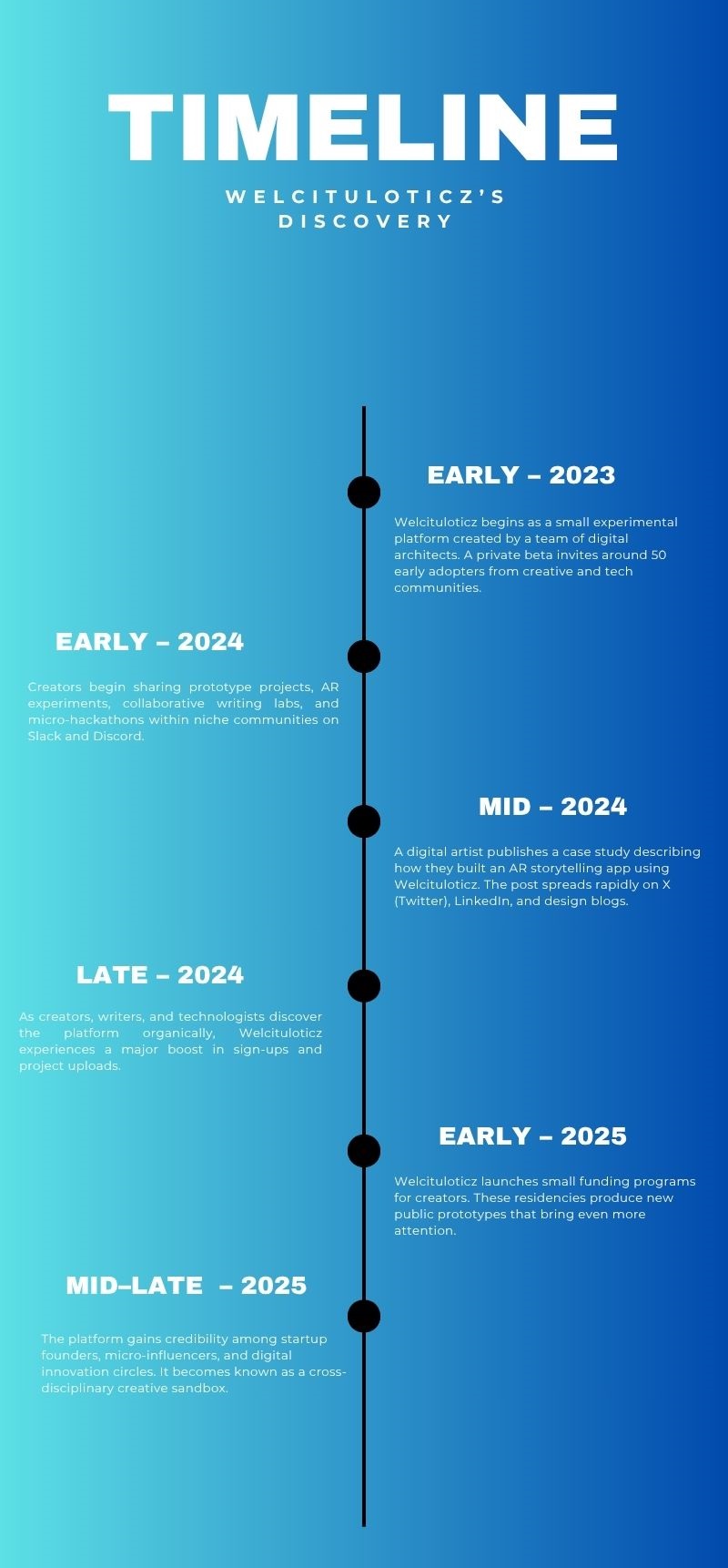
The discovery of Welcituloticz didn’t happen overnight. In late 2023, a small beta version of the platform was quietly launched to a select group of creators. The founding team invited approximately 50 early adopters, including independent designers and technologists, to contribute to pilot projects. This small, tight-knit community generated:
-
Experimental digital art pieces (interactive web-experience, AR prototypes)
-
Collaborative writing and storytelling labs
-
Mini hackathons to explore new web-native tools
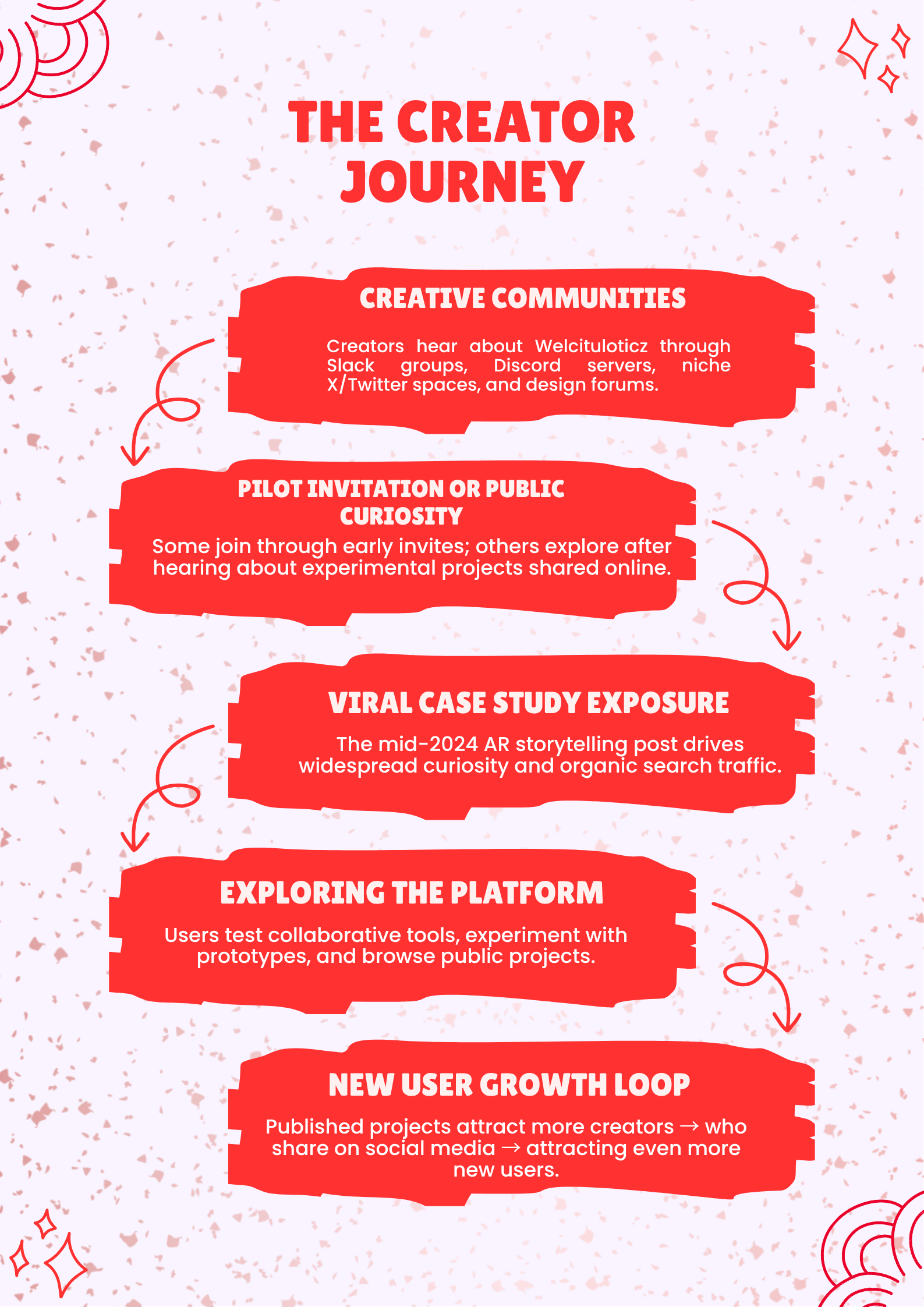
These early projects were not publicized broadly, but word spread through creative Slack communities, Discord servers, and niche Twitter/X circles. By early 2024, blog posts and social media mentions by these early adopters began catching attention outside the inner circle and that set the stage for broader discovery.
Timeline of Welcituloticz’s Discovery (2023–2025)
Key Turning Point: The Viral Moment (Mid-2024)
Midway through 2024 was the turning point. One of the pilot creators published a viral case study a medium-form essay recounting how they built an experimental AR storytelling app using Welcituloticz’s collaborative toolkit. That essay resonated with a much wider audience:
-
Tech-savvy designers appreciated the freedom to prototype boldly.
-
Writers and creators found value in a shared creative space.
-
Investors saw potential in a cross-disciplinary sandbox that could incubate future digital products.
This case study was shared across design blogs, LinkedIn, and startup newsletters. Almost overnight, Welcituloticz transitioned from “beta project among friends” to a named platform on many digital creators’ radars. In 2025, the platform’s user base grew exponentially as new creators, curious collaborators, and early-stage entrepreneurs joined.
How Creators Discover Welcituloticz
Why It Exploded: Core Drivers of Discovery
1. Cross-Discipline Appeal
Welcituloticz’s very design encouraged innovation across disciplines. Because it catered simultaneously to coders, writers, and artists, it tapped into multiple communities each of which brought their own networks.
2. Low Entry Barrier + High Flexibility
Unlike more formal incubators or design labs, Welcituloticz allowed creators to join without heavy onboarding. The interface was simple, sandbox-like, and highly flexible letting users experiment without rigid constraints.
3. Word-of-Mouth & Organic Thought Leadership
Rather than relying on paid marketing in its early days, the platform banked on word-of-mouth from creators. The viral case study in mid-2024 and subsequent user testimonials built trust more authentically than any ad campaign could.
4. Strategic Mini-Grants & Micro-Residencies
In mid-to-late 2024, the Welcituloticz team rolled out small micro-residency grants to creators who wanted to use the platform for free in exchange for creating open projects. This not only seeded high-quality content but also produced shareable, community-led case studies that boosted discovery.
5. Partnerships with Niche Influencers
Instead of mainstream influencers, Welcituloticz partnered with micro-influencers in very niche creative circles: generative artists, indie game developers, letterpress designers. These creators highlighted how the platform enabled prototypes that traditional tools did not.
Multiple Perspectives on Its Discovery (2025 Analysis)
To fully appreciate how welcituloticz discovered, it helps to look through different lenses:
Perspective |
How They Discovered It |
Why It Resonated |
|---|---|---|
Independent Creators / Artists |
Invited to beta, shared peer-to-peer |
Loved the experimental canvas and freedom to prototype freely. |
Startup Founders / Tech Builders |
Through venture-developer newsletters |
Saw potential in a sandbox for rapid prototyping and user-testing. |
Writers & Storytellers |
Via viral blog essay and creative writing communities |
Appreciated collaboration tools and shared workspaces. |
Investors / Backers |
After seeing growing creator case studies |
Realized the platform could be a breeding ground for future digital products. |
From each perspective, Welcituloticz was discovered by different pathways but all converged because of the platform’s wide creative appeal.
Risks and Challenges That Accompanied the Discovery
When something is discovered quickly, not all is smooth sailing. Here are some of the risks and challenges that Welcituloticz faced during its discovery-phase:
-
Scalability Issues: Rapid growth in 2025 strained the platform’s infrastructure. Some users report slow load times when working on large collaborative projects.
-
Quality Control: With so many contributors coming in, maintaining the quality of shared projects and preserving the experimental spirit became harder.
-
Monetization Pressure: As the user base grew, pressure to monetize threatened to change the open, grant-driven model. Some early creators worried that paid features would lock out future innovators.
-
Community Cohesion: Because of its broad appeal, community fragmentation became a challenge coders, writers, and artists sometimes struggled to find shared ground.
Despite these challenges, the core community remained committed to the original vision of open experimentation.
Welcituloticz vs Traditional Innovation Spaces
Feature |
Welcituloticz |
Traditional Incubators |
Media Labs / Co-working Tech Hubs |
|---|---|---|---|
Accessibility |
Open to creators with low barriers |
Competitive entry |
Usually expensive or limited |
Creative Freedom |
High — sandbox-style experimentation |
Low — structured programs |
Medium — varies |
Interdisciplinary Collaboration |
Strong across writers, coders, artists |
Limited by cohort type |
Moderate |
Funding Opportunities |
Micro-grants and residencies |
Large, formal funding |
Rare or project-based |
Community Vibe |
Experimental, cross-creative |
Business-focused |
Tool-focused |
Speed of Prototyping |
Fast — no strict rules |
Slow due to process |
Medium |
Discovery Path |
Viral, community-driven |
Formal pitching |
Local events or networks |
Why Welcituloticz’s Discovery Matters (Expert Commentary)
From my perspective as a digital innovation strategist, the discovery of Welcituloticz is deeply significant for several reasons:
-
It’s a New Model for Creator Collaboration
Unlike many platforms that silo creators by discipline, Welcituloticz’s cross-disciplinary environment fosters genuinely novel ideas. -
It Demonstrates the Power of Micro-Communities
The platform’s rise was driven less by massive ad campaigns and more by small, passionate circles of creators. That’s a powerful insight for how future platforms might grow. -
It Could Be a Testing Ground for Tomorrow’s Products
The prototypes and experiments born on Welcituloticz aren’t just art or side-projects. Some are likely to evolve into startups or commercial products. That means the platform isn’t just a lab, it’s a potential innovation pipeline.
Related Questions People Also Ask (and Their Answers)
Q: How did people first hear about Welcituloticz?
People first heard about Welcituloticz through creative communities Slack, Discord groups, and niche social media plus a viral case study published by a pilot creator that described building an AR storytelling app using the platform.
Q: Is Welcituloticz still invite-only?
As of 2025, Welcituloticz has opened its doors more broadly. While there was an invite-only beta in 2023–2024, the platform has since introduced lightweight onboarding for new creators, though some advanced features still require approval or a micro-residency application.
Q: Why did investors pay attention so early?
Investors were drawn by the platform’s cross-disciplinary model and the quality of experimental projects coming out of its grant residencies. Early case studies showed that Welcituloticz could act as an incubator for real products.
Q: What kinds of creators use Welcituloticz?
A surprisingly wide range: digital artists, AR/VR developers, writers, content strategists, indie game makers, and even academic technologists. Its open sandbox makes it attractive to anyone who wants to prototype or collaborate.
Q: What are the biggest risks if you join now?
Main risks include infrastructure strain, uncertainty about long-term monetization, and potential dilution of the community’s experimental ethos if paid tiers dominate.
Conclusion: The Significance of Welcituloticz’s Discovery
In sum, Welcituloticz’s discovery wasn’t just a by-product of good marketing; it was a carefully cultivated phenomenon borne from cross-disciplinary ambition, community-first design, and experimental grant programs. By mid-2024, that quiet beta had rippled into a broad creative wave. By 2025, the platform had established itself as a meaningful place for creators to prototype, collaborate, and build the next generation of digital experiences.
Its journey from obscurity to recognition offers a powerful case study in how modern digital platforms can grow through authenticity, micro-communities, and creative freedom. For creators, technologists, and potential backers alike, the story of Welcituloticz is far from over: it’s just beginning.